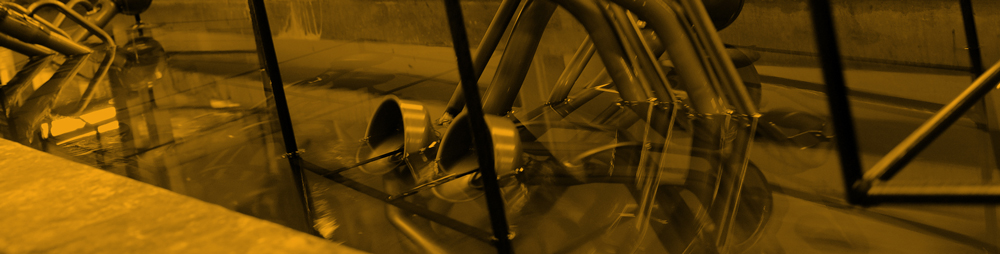
Sprayed Thermoplastic Powders
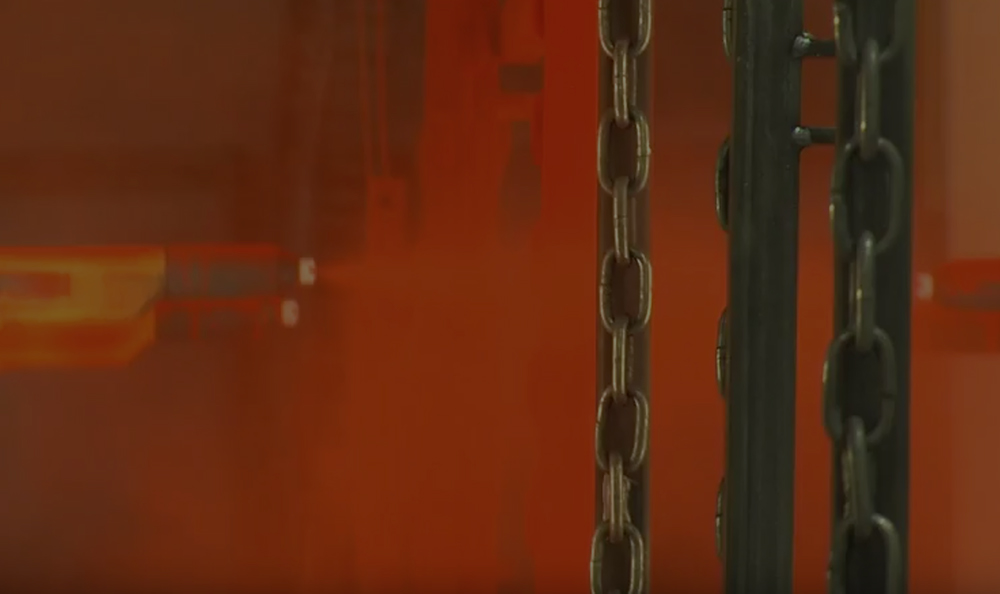
Electrostatically applied Thermoplastic powders.
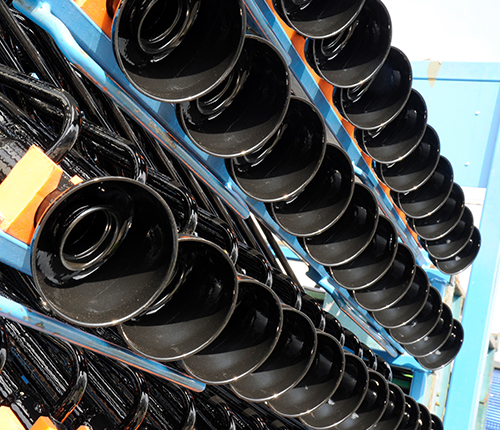
The spraying of Thermoplastic Powders (PPA, Talisman, Rilsan, Nylon) as opposed to the more common Electrostatic spraying of Epoxy, Epoxy Polyester and Polyester also known as Thermoset materials (Powder Coating), is a speciality at Plastic Coatings Ltd.
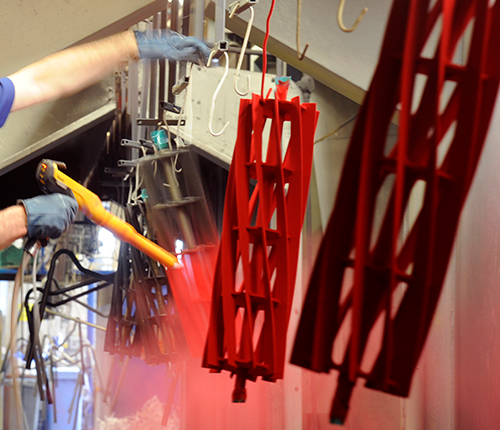
Using a similar process to Powder coating, electrostatically charged Thermoplastic Powder particles are sprayed onto the substrate (component) which is earthed via its hanging point on the conveyor track. At this point the particles of powder are held on to the substrate (component) purely by the induced (electrostatic) charge.
Both component and powder are then stoved in accordance with best practice and the powder manufacturers’ technical guidelines, ensuring full melt and flow is achieved. The material does not chemically cure like a thermosetting powder, it simply flows into a smooth and very durable coating film when heated.
To give our customers full confidence in our abilities to carry out these processes robustly, our systems are regularly verified by the leading powder manufacturers. This is demonstrated through our Plascoat Systems Approval.
Coating Performance
The performance of any coating depends upon the pre-treatment specified and all coatings should be considered as part of a ‘coating system’. Pre-treatments include abrasive blasting (grit blast, sand blast, shot blast), conversion coatings (zinc phosphate, zirconium phosphate, iron phosphate, tri-cationic phosphate) & primer coats (zinc rich polyester, epoxy barrier primer, E-coat or Electrophoretic Coating). Plastic Coatings Ltd are able to offer all of these treatments and more as in-house services and therefore can tailor a process to suit your technical requirements whilst providing a cost effective solution.
Coating performance is often measured in Salt Spray Resistance hours. Expected performance of a thermoplastic powder coat system could be upwards from 100 hours to well over 5000 hours with PPA material and a comprehensive pre-treatment system.
Other Benefits Of Using PCL
Further to the treatments mentioned here, we also have in-house coating stripping facilities. This means that we can often support your coating refurbishment requirements too (the success of this process is subject to the condition of the parts requiring treatment / refurb).
Coating materials used are the PPA ® 571 ES range and Electrostatic Nylon 11 & Nylon 12 (Rilsan ®, Nylon PA 11, Nylon PA 12).
Features includes:
- Thicker coatings than traditional 'Powder Coating'
- Excellent corrosion resistance
- Good abrasion resistance
- Good Impact resistance
- Excellent Weather resistance
- Flexible
- 'Warm' to the touch
- Excellent UV resistance
- Good Edge coverage
- Easy clean
Typical components are:
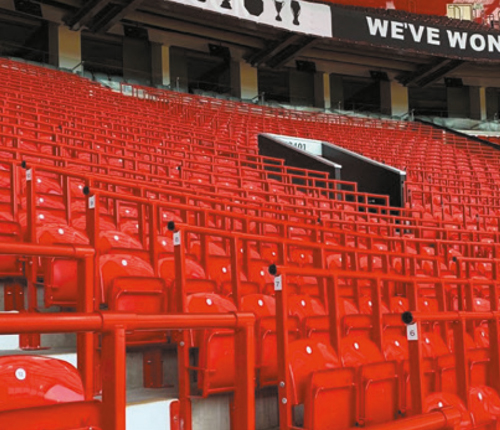
- Stadia Seating
- Rainwater Gutters and Downpipes
- Roof rack components
- Outdoor Wirework
- Garden Equipment
- Industrial Roof Insulation Supports
- Display equipment
- Handrailing
- Security Posts
- Barriers
- Industrial / commercial roofing fall arrest and outlet / ventilation components
- Filter screens / frames
- Vehicle underbody components
Need a quote for an upcoming project?
Call or email us for a free quote.
-
- Customer approvals



-
- Other approvals